
Do Dividends Go On The Balance Sheet?
- ३१ असार, २०७७
- Bookkeeping
- Nepal Updates
Content

The payment date is when the dividend is actually paid to shareholders (big surprise right!). This is when the cash outflow occurs for a cash dividend, additional shares are issued for a stock dividend, or the property is transferred for a property dividend. Dividends Payable is the amount of the after tax profit a company has formally authorized to distribute to its shareholders, but has not yet paid in cash. In accounting, dividends payable is a liability on the company’s balance sheet. The day on which the Hurley board of directors formally decides on the payment of this dividend is known as the date of declaration.
The preferred shareholder accumulates the right to payment of a dividend until it is paid in the future. These accumulated dividends must be paid before common shareholders receive a newly declared dividend. The date of record is when the business identifies the shareholders to be paid.
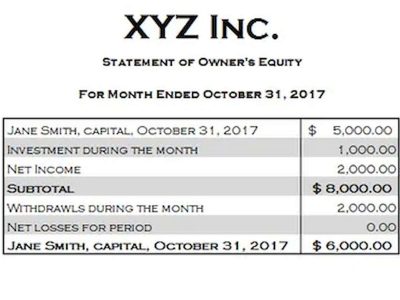
This type of dividends increases the number of shares outstanding by giving new shares to shareholders. Instead of reducing cash, stock dividends increase the number of shares. The reason is that preferred stockholders have a higher claim to dividends than common stockholders do. Many companies include preferred stock dividends on their income statements; then, they report another net income figure known as “net income applicable to common.” Such dividends—in full or in part—must be declared by the board of directors before paid.
Accountingtools
If you haven’t already done so, to record the proposed dividend, you also need to create additional nominal ledger accounts in the Overheads, Equity and Current Liability categories. Payment date — the day on which dividend cheques will actually be mailed to shareholders or the dividend amount credited to their bank account. The ex-dividend date, or ex-date, is the date on which a stock begins trading without the dividend. To receive the declared dividend, shareholders must own the stock prior to the ex-dividend date. Once you have the total dividends, converting that to per-share is a matter of dividing it by shares outstanding, also found in the annual report.

Regular cash dividends paid on common stock arenotdeducted from the income statement. For example, suppose a company made $10 million in profit and paid $9 million in dividends. The income statement would show $10 million, and the balance sheet would show $1 million. The cash flow statement would show $9 million in dividends distributed. Cash dividends are the most common form of payment and are paid out in currency, usually via electronic funds transfer or a printed paper check.
How Is An Accrued Dividend Recorded?
Companies must pay unpaid cumulative preferred dividends before paying any dividends on the common stock. As you would expect, dividends shouldn’t impact the operating activities of your company. That means declaring, paying, and recording dividends won’t change anything on your income statement or profit and loss statement. Other businesses stress rapid growth and rarely, if ever, pay a cash dividend. The board of directors prefers that all profits remain in the business to stimulate future growth. For example, Netflix Inc. reported net income for 2008 of over $83 million but paid no dividend.
- The stockholder’s investment remains unchanged but, hopefully, the stock is now more attractive to investors at the lower price so that the level of active trading increases.
- Interestingly, stock splits have no reportable impact on financial statements but stock dividends do.
- It is important to realize that the actual cash outflow doesn’t occur until the payment date.
- This explains why state laws likely require corporations to have a credit balance in Retained Earnings before declaring and paying dividends.
- This means that whether or not the firm is able to pay the dividends, the shareholder must earn dividends.
- Whether you’re a new or experienced investor, you may have a hard time explaining what preferred stock is and how it affects a company’s worth.
Registration in most countries is essentially automatic for shares purchased before the ex-dividend date. In financial history of the world, the Dutch East India Company was the first recorded company ever to pay regular dividends. The VOC paid annual dividends worth around 18 percent of the value of the shares for almost 200 years of existence (1602–1800).
It is important to realize that the actual cash outflow doesn’t occur until the payment date. According to GAAP or other accounting rules there is no specific for declaration and recording accrued dividend. The time span for which these dividends are kept recorded but unpaid is also defined by general accounting rules. Most of the firms record this dividend in balance sheet few weeks prior to the payment date that is decided to pay the shareholders. After recording and declaration of accrued dividend it’s no longer remains the part of the stock of the business instead it becomes the property of the shareholder.
Common Stock Dividends Paid
Public companies usually pay dividends on a fixed schedule, but may declare a dividend at any time, sometimes called a special dividend to distinguish it from the fixed schedule dividends. Cooperatives, on the other hand, allocate dividends according to members’ activity, so their dividends are often considered to be a pre-tax expense. When a dividend is later paid to shareholders, debit the Dividends Payable account and credit the Cash account, thereby reducing both cash and the offsetting liability. As soon as the Board of Directors approves and announces a dividend , the company must record a payable in the liability section of the balance sheet. Cash dividends are paid out of the company’s retained earnings, so the journal entry would be a debit to retained earnings and a credit to dividend payable.
- If so, the company would be more profitable and the shareholders would be rewarded with a higher stock price in the future.
- If your corporation makes a profit, you can either invest the profit back into your business as, or pay it to your shareholders.
- No dividends are paid on treasury stock, or the corporation would essentially be paying itself.
- Payments can be received as cash or as reinvestment into shares of company stock.
- Dividend payout ratio is the proportion of a company’s earnings that is used to pay dividends to investors.
- It is calculated before deducting the required dividends paid on the outstanding preferred stock.
- Stock SplitStock splits refer to the process whereby a company increases its number of shares, reducing the per-share price of the stocks.
Interestingly, stock splits have no reportable impact on financial statements but stock dividends do. While a company technically has no control over its common stock price, a stock’s market value is often affected by a stock split. When a split occurs, the market value per share is reduced to balance the increase in the number of outstanding shares. In a 2-for-1 dividends in accounting split, for example, the value per share typically will be reduced by half. As such, although the number of outstanding shares and the price change, the total market value remains constant. If you buy a candy bar for $1 and cut it in half, each half is now worth $0.50. The total value of the candy does not increase just because there are more pieces.
Closing Revenue, Expense, And Dividend Accounts
When your business does well, and you are satisfied with how much money you are re-investing into your business, you can pay out a portion of your retained earnings to your shareholders as a dividend. Simply put, retained earnings are the cumulative total of annual earnings incurred by your company after you have paid all of your expenses and distributed any dividends. Dividend payout ratio is the proportion of a company’s earnings that is used to pay dividends to investors. Dividend sustainably is how likely it is that a company will be able to maintain or increase its dividend payments. Some companies have grown their dividend payments for over 25 consecutive years, and are called dividend aristocrats. The steps for a stock dividend are similar to the steps for a cash distribution except the accounting is slightly more complicated depending on whether asmall stock dividendorlarge stock dividendis issued. From the retained earnings, some part is distributed to the stockholders of the company which is then proposed in front of the board of directors of the company.
In some states, corporations can declare preferred stock dividends only if they have retained earnings at least equal to the dividend declared. Declaring and paying dividends will change your company’s balance sheet. Don’t worry, your balance sheet will still balance since there will be offsetting changes.
Any income that your business has generated that is taxed at a higher rate can be paid as an eligible dividend. However, any business income that has been taxed at the lower rate, or small business rate, will be paid as an ineligible dividend. The money used to pay dividends comes directly from the income of a company. The record date determines a recent share-buyers eligibility to receive a dividend payment for that period. With nowhere left to open new stores and a production rate that more than meets demand, Walmart uses some of its excess cash to pay dividends as a reward to its many investors. If the payment type you selected was assigned a payment type of Other, the account assigned to the payment type will display in the Account box, and the Bank Account and Bank Deposit lookups are disabled.

On the date of declaration a journal entry is made to record the amount payable to each shareholder by debiting retained earnings and crediting common stock dividend payable. When the distribution is paid, the payable account is debited and the cash account is credited. The existence of a cumulative preferred stock dividend in arrears is information that must be disclosed in financial statements. Only dividends that have been formally declared by the board of directors are recorded as liabilities. If cumulative, a note to the financial statements should explain Wington’s obligation for any preferred stock dividends in arrears. You can’t completely rely on reported net income as it appears at this point, though, because of the nature of preferred stock and its dividends.
What Is The Declaration Date For A Dividend?
When a company does not wish to allocate dividends to all shareholders or cannot do so, they may opt for a preferred dividend. Only shareholders who own preferred shares in the company receive the benefits of a preferred dividend, resulting in smaller outlay by the company to cover the dividends. Large stock dividends, of more than 20% or 25%, could also be considered to be effectively a stock split. Dividends are often expected by the shareholders as a reward for their investment in a company. Dividend payments reflect positively on a company and help maintain investors’ trust. Since Retained Earnings is a component of stockholders’ equity, the declaration and payment of a dividend reduces the corporation’s assets and its stockholders’ equity. Some companies issue many different types of preferred stock all at once.
One of the most useful reasons to calculate a company’s total dividend is to then determine the dividend payout ratio, or DPR. This measures the percentage of a company’s net income that is paid out in dividends.
Dividends can alternatively be “special,” meaning that they are a one-time payment that won’t repeat (or won’t repeat at the same amount), but more often dividends are paid on a schedule. The declaration date is when the Board of Directors would approve the dividend and announce the future dividend payment to shareholders.
Receive Board Approval
A shareholder may remain indifferent to a company’s dividend policy as in the case of high dividend payments where an investor can just use the cash received to buy more shares. A company that lacks sufficient cash for a cash dividend may declare a stock dividend to satisfy its shareholders. Note that in the long run it may be more beneficial to the company and the shareholders to reinvest the capital in the business rather than paying https://www.bookstime.com/ a cash dividend. If so, the company would be more profitable and the shareholders would be rewarded with a higher stock price in the future. To record the declaration, you’ll debit the retained earnings account – the company’s undistributed accumulated profits for the year or period of several years. Debiting the account will act as a decrease because the money that is being paid out would otherwise have been held as retained earnings.
On May 1, the date of declaration, the value of the dividend to be paid is deducted from retained earnings and set up as a liability in a separate dividends payable account. If a company has both preferred and common stockholders, the preferred stockholders receive a preference if any dividend is declared.
When the corporation pays the dividend, Dividends Payable will be debited and Cash will be credited. Stock market rules say that the buyers must have purchased the share at least two days before the record date to receive payment. Dividends can alternatively be “special,”meaning that they are a one-time payment that won’t repeat (or won’t repeat at the same amount), but more often dividends are paid on a schedule. A dividend is an amount of money paid by a company to its shareholders. Dividends are important as they are a tax-efficient way to pay yourself from your limited company.
How To Buy Dividend
For example, if shares sell for $10 each and pay a $0.20 annual dividend, then the dividend yield is 2%. Dividend yield refers to the percentage of the share price that gets paid back as a dividend. We’ll help walk through setting up your business, switching accountant or any of your tax queries.
Cash Dividend Payments
Other than drawing dividends as income, you may also consider paying dividends into a pension fund, ISA or to family members. When the Board of Directors approve and announce a cash dividend, then the company must record a liability for the dividend. Declaration date – This is when the board of directors declares a dividend, by acknowledging that a dividend will be paid soon. An Accrued Dividend, also known as an accumulated dividend is a dividend whose payment date is due but it has not been paid to the shareholder. The dividend is retained by the issuer until paid, so it is accrued or accumulated.
You’ve now recorded the payment which clears the value on the dividend liability nominal ledger account. The value for the proposed dividend remains on the Balance Sheet Report. If you would rather show it on a profit and loss nominal ledger account, please refer to the following section. Some companies have dividend reinvestment plans, or DRIPs, not to be confused with scrips.
Board Of DirectorsBoard of Directors refers to a corporate body comprising a group of elected people who represent the interest of a company’s stockholders. The board forms the top layer of the hierarchy and focuses on ensuring that the company efficiently achieves its goals. Public CompaniesPublicly Traded Companies, also called Publicly Listed Companies, are the Companies which list their shares on the public stock exchange allowing the trading of shares to the common public.